
“When I was a little kid, all the Barbies looked like women I couldn’t relate to at all,” Bryce Gruber, a shopping editor, told JNS.
By Jessica Russak-Hoffman
A new Barbie by Mattel, special for Hanukkah, is stirring up controversy after critics said that it has a large nose.
Sold on Target’s website for $27.49, the doll has brown hair, freckles and wears a blue knit Hanukkah sweater, pajama pants and cozy winter slippers. The New York Post first drew attention to the controversy, noting that some Reddit posters described the nose as “prominent” and “hooked.” Target lists the doll for $27.49, although it was out of stock as of Friday. Shoppers can find the listing by searching Target’s website for “Barbie Holiday Sweater Collectible Doll in Themed Blue Knit Sweater.”
Enlarged and hooked noses are centuries-old antisemitic visual tropes.
Bryce Gruber, editor of Extra Good, a style and consumer insights newsletter, told JNS that she likes the new Hanukkah Barbie.
“I do feel like she looks like a lot of us,” Gruber said. “There’s obviously nuance and a lot of variations within the tribe, but I think there’s a good chunk of the population, myself and my daughters included, able to see themselves in this Barbie.”
“Not to be too dramatic, but when I was a little kid all the Barbies looked like women I couldn’t relate to at all,” she told JNS. “The message was very clear in 1991. Blonde is the most beautiful and that’s that.”
“My cousin came from a work trip to Japan with a Japanese Barbie, and it lit something up in me. I was 6 or 7 years old at the time,” Gruber said. “I had never seen a dark-haired Barbie before. I knew I didn’t look like that Barbie either, but it was still exciting.”
Gruber said that “a lot of people are upset that the facial dimensions are slightly different with Jewish Barbie,” but she thinks “it’s OK to honor that, as long as it’s understood that it’s not a blanket for an entire population.”
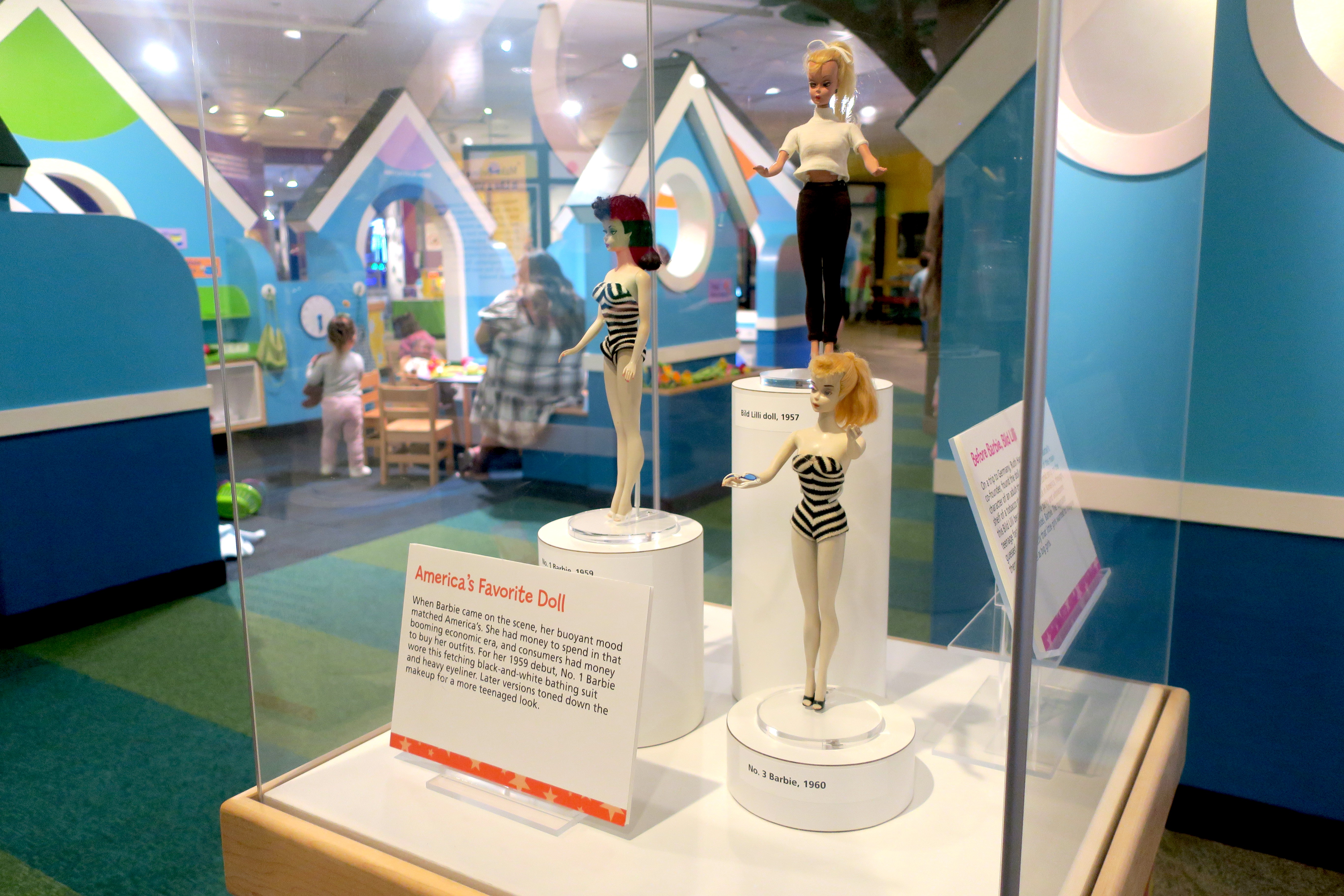
Others are happy to see the popular doll, which Ruth Handler, a Jewish woman, created in 1959 and named for her daughter Barbara, celebrating a Jewish holiday.
Danielle Yablonka, “Miss Israel” 2026, told JNS that “including Jewish holidays and Jewish people in mainstream culture should be the bare minimum.”
“We shouldn’t have to be surprised to see ourselves represented,” she said. “But at the same time, I can’t pretend it doesn’t make me smile.”
“Even something as simple as walking into HomeGoods or T.J. Maxx and seeing a section of Hanukkah decorations genuinely excites me,” she told JNS. “There’s something special about seeing your traditions reflected in spaces that are part of everyday American culture.”
Yablonka, who will represent Israel in the upcoming Miss Universe pageant, told JNS that Barbie feels “personal” to her, since “she’s such an iconic part of childhood.”
“I grew up playing with Barbie, so seeing a classic toy that generations of kids have loved wearing a Hanukkah sweater with a menorah and Stars of David feels really sweet,” she said. “It’s a small thing, but representation often lives in those small moments.”
“Jewish representation shouldn’t feel groundbreaking, but that doesn’t mean we can’t celebrate it,” Yablonka said. “I love seeing something so familiar reflect a piece of who I am and where I come from.”

